How Much Juice in One Lemon
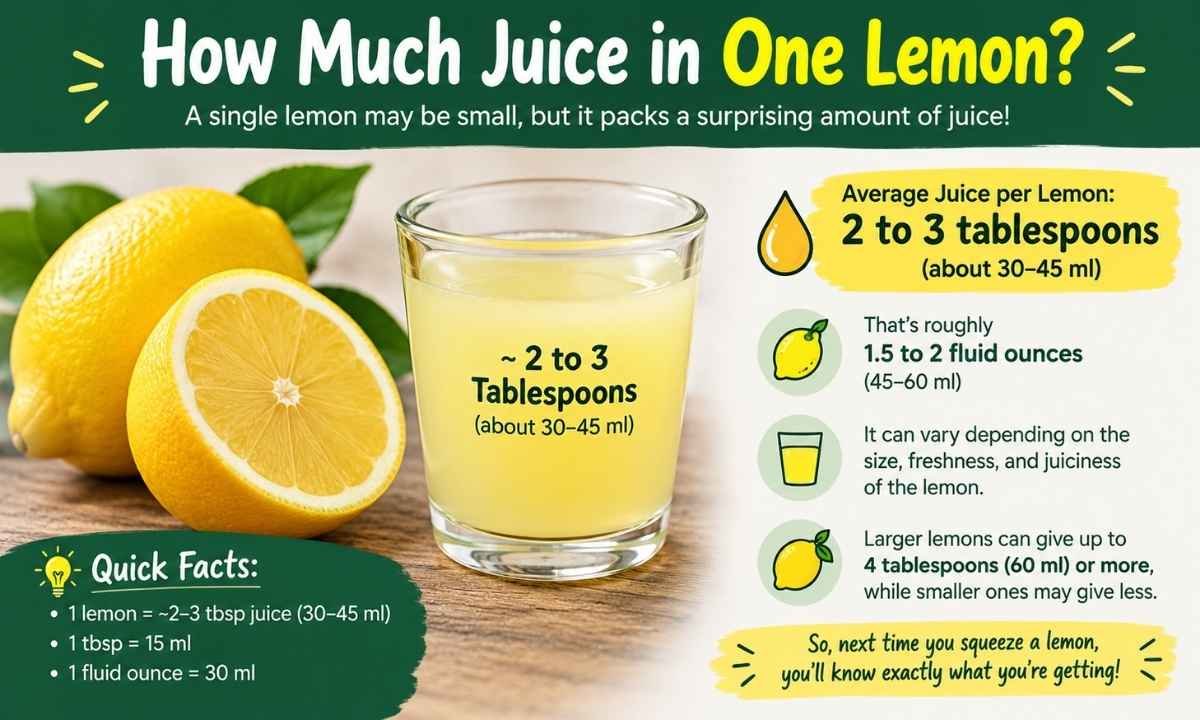
One medium lemon gives about 2 to 3 tablespoons of juice, or 30 to 45 mL. Small lemons yield nearer 2 tablespoons, while large ones can reach 3 or more. Ripeness and technique change the result.
This guide gives exact conversions for recipes and a quick shopping chart. It also explains juicing methods that need no special equipment, plus how long squeezed juice keeps, so leftovers do not go to waste.
How much juice in one lemon?
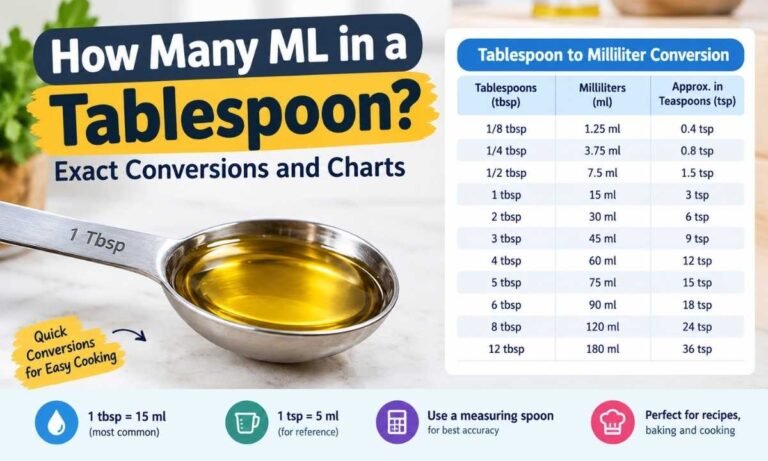
Most recipe sources agree on 2 to 3 tablespoons from an average lemon. That equals about 1 to 1.5 fluid ounces. Because a tablespoon holds 15 mL, a typical lemon delivers between 30 and 45 mL of juice.
| Lemon size | Juice (tablespoons) | Juice (mL) |
|---|---|---|
| Small | About 2 | About 30 |
| Medium | 2 to 3 | 30 to 45 |
| Large | 3 to 4 | 45 to 60 |
| Meyer | 1 to 2 | 15 to 30 |
Meyer lemons are the main exception. They are smaller and sweeter than the common Eureka and Lisbon types, and they usually give only 1 to 2 tablespoons each. Plan on extra fruit when a recipe specifies Meyer.
Several factors change the yield. Age counts, because older lemons dry out and give less juice. Variety, size and skin thickness play a part, and so do fruit temperature and the pressure you apply. Some are easy to control.
How much lemon juice in one lemon
Hand squeezing usually lands at the lower end of the range. A reamer or press can pull out an extra tablespoon, so one lemon may give 3 to 4 tablespoons with good technique. Half a lemon holds about 1 tablespoon.
How many lemons do I need for a cup of lemon juice?
One cup equals 16 tablespoons. At 3 tablespoons per lemon, you need about 5 to 6 medium lemons. Large, well juiced lemons can bring that down to 4, while small or Meyer lemons may require 8 or more.
| Juice needed | Medium lemons |
|---|---|
| 1/4 cup (4 tablespoons) | 2 |
| 1/2 cup (8 tablespoons) | 3 to 4 |
| 3/4 cup (12 tablespoons) | 4 to 5 |
| 1 cup (16 tablespoons) | 5 to 6 |
A safe habit is buying one or two lemons more than the math suggests. Yield varies from fruit to fruit, and a dry lemon can throw off a recipe that depends on acidity, such as curd or dressing.
How many lemons needed
For small amounts, the rule is simple. Half a lemon covers about 1 tablespoon, and one whole lemon covers 2 to 3. Juice one first to measure your own yield before cutting the rest of the batch.
| One medium lemon gives | Amount |
|---|---|
| Fresh juice | 2 to 3 tablespoons |
| Zest | About 1 tablespoon |
| Bottled juice equivalent | 2 to 3 tablespoons |
Bottled juice swaps in tablespoon for tablespoon, so one lemon equals 2 to 3 tablespoons of bottled juice. Flavor differs, though, and fresh juice tastes brighter in uncooked dishes where lemon is the main note.
When a recipe says “the juice of one lemon,” assume 2 to 3 tablespoons. If it asks for half a lemon, use 1 to 1.5 tablespoons. Writers rarely specify size, so taste and adjust as you cook.
How to juice a lemon
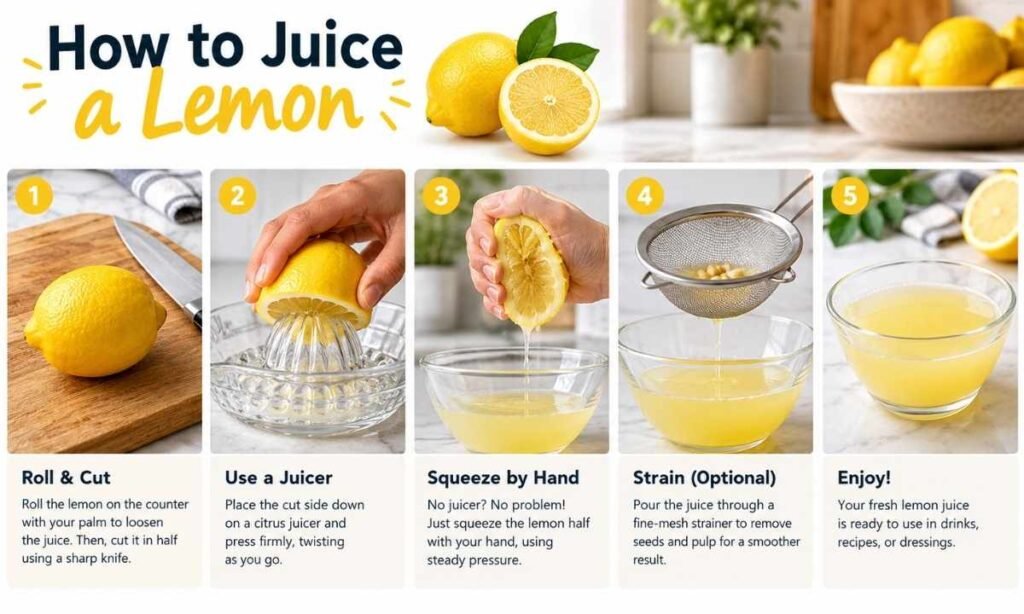
Good juicing starts before the knife. Choose lemons that feel heavy for their size, with thin, smooth skin that gives slightly under a gentle press. Heavy fruit holds more juice, while hard, wrinkled lemons are usually drier.
Wash the lemon under running water before cutting. The knife pulls anything on the skin into the flesh, and washing matters even more when you plan to zest. Dry the fruit so it does not slip.
- Bring the lemon to room temperature, or warm it briefly.
- Roll it firmly under your palm on the counter for 10 to 15 seconds.
- Cut it in half across the middle, not through the stem ends.
- Squeeze each half cut side up over a bowl, rotating as you press.
- Strain out seeds and pulp if you need clear juice.
For a large batch, halve all the lemons before you start and work through them in one session. Pour the juice through a fine strainer into a measuring jug so you can check the volume against the recipe.
Remember to zest the lemon first, if needed
Zest the whole lemon before cutting it, because a juiced lemon half is nearly impossible to grate. Use a fine grater and take only the yellow layer. The white pith underneath tastes bitter and spoils the flavor.
One medium lemon gives about 1 tablespoon of zest. If a recipe calls for juice and you have zest to spare, you can often add it too. Freeze extra zest in a small bag for later.
How to get the most juice out of a lemon
Warmth and pressure loosen the pulp so juice flows more easily. Roll the lemon firmly on a counter, or microwave it for 10 to 20 seconds. Let it cool slightly before cutting, since a hot lemon is awkward to handle.
Cut crosswise, press the cut side onto a reamer, and twist while squeezing. Rotating the fruit works juice from every segment. A final squeeze in your fist over a strainer catches the seeds and the last drops.
Do not crush the rind. Pressing too hard can push bitter oils from the peel into the juice. Firm, steady pressure gives a cleaner flavor than flattening the fruit completely. Crushed seeds add bitterness too, so strain before use.
How to juice a lemon without a juicer
A fork works well. Insert the tines into the cut face, then twist the fork while squeezing the lemon with your other hand. The tines break the pulp apart, so juice drains faster into the bowl.
- Wooden spoon: press and twist the handle inside a lemon half.
- Cheesecloth or mesh strainer: wrap the half and squeeze, which also holds back seeds.
- Garlic press: works for small amounts if you remove the seeds from a wedge first.
- Bare hands: squeeze over a strainer set above a bowl.
Hand squeezing alone still works, though it is slower and tires the grip after several lemons. Pair it with a small strainer to catch seeds, and expect a slightly lower yield than a reamer usually provides.
House favorite tools for juicing lemons
The right tool depends on volume. A simple reamer handles one or two lemons easily, while an electric juicer saves real effort when a recipe needs a cup or more. Handheld presses sit in the middle.
| Tool | Best for | Trade off |
|---|---|---|
| Reamer | 1 to 2 lemons | Slower, tires the hand |
| Handheld press | 3 to 8 lemons | Bulkier to store |
| Electric juicer | A cup or more | More to clean |
Any of these will work if you strain the juice afterward. Pick based on how often you juice, not on features. Hand tools are easier to wash, which matters when you juice a single lemon for a quick recipe.
How long does lemon juice last?
Fresh squeezed lemon juice keeps best for 3 to 4 days in a sealed container in the refrigerator. Some sources allow up to a week, but flavor fades as the juice is exposed to oxygen and can turn bitter.
| Storage | Best quality | Notes |
|---|---|---|
| Refrigerator, sealed | 3 to 4 days | Up to a week at lower quality |
| Freezer, in cubes | About 4 months | Some sources say up to 6 |
Squeezed juice reacts with air quickly. Over a few days the bright taste dulls, and bitterness can build. This is mostly a quality change, but you should still check for the spoilage signs below. Cold storage slows the process without stopping it.
Use a clean glass jar with a tight lid, and fill it close to the top to leave less air inside. Label the date so you remember when it was squeezed. Keep the jar at the back of the fridge.
To freeze, strain the juice and pour it into ice cube trays. Once solid, move the cubes to a freezer bag. Many trays hold about 2 tablespoons per cube, so you can thaw only what a recipe needs.
Thaw cubes in the refrigerator, or drop them straight into hot dishes and drinks. Frozen juice works well in cooking, though thawed juice can taste slightly less bright than freshly squeezed. Label bags with the date.
Discard juice that smells off or looks cloudy, and throw out anything with visible mold. When unsure, do not taste it. Old juice mostly turns bitter, but spoiled juice can still be unsafe to drink.
Frequently Asked Questions
How many tablespoons of juice are in one lemon?
About 2 to 3 tablespoons from a medium lemon. Large lemons can give 3 to 4, and Meyer lemons often give only 1 to 2.
How many lemons make half a cup of juice?
About 3 to 4 medium lemons, since half a cup equals 8 tablespoons.
Is bottled lemon juice equal to fresh in recipes?
Yes, measure for measure, tablespoon for tablespoon. Fresh juice tastes brighter, especially in uncooked dishes.
Why is my lemon not juicy?
Old, dry or very firm lemons hold less juice. Choose fruit that feels heavy for its size, with thin, smooth skin.
Can I freeze lemon juice?
Yes. Strain it, freeze it in ice cube trays, then keep the cubes in a freezer bag for several months.
How much zest does one lemon give?
A medium lemon gives about 1 tablespoon of zest.
Final thoughts
One lemon gives about 2 to 3 tablespoons of juice, so a cup needs roughly 5 to 6 medium lemons. Buy a little extra, zest before you juice, and refrigerate or freeze leftovers promptly. Warm fruit yields more.