Chipotle Burrito Menu 2026: What to Order, Prices & Calories
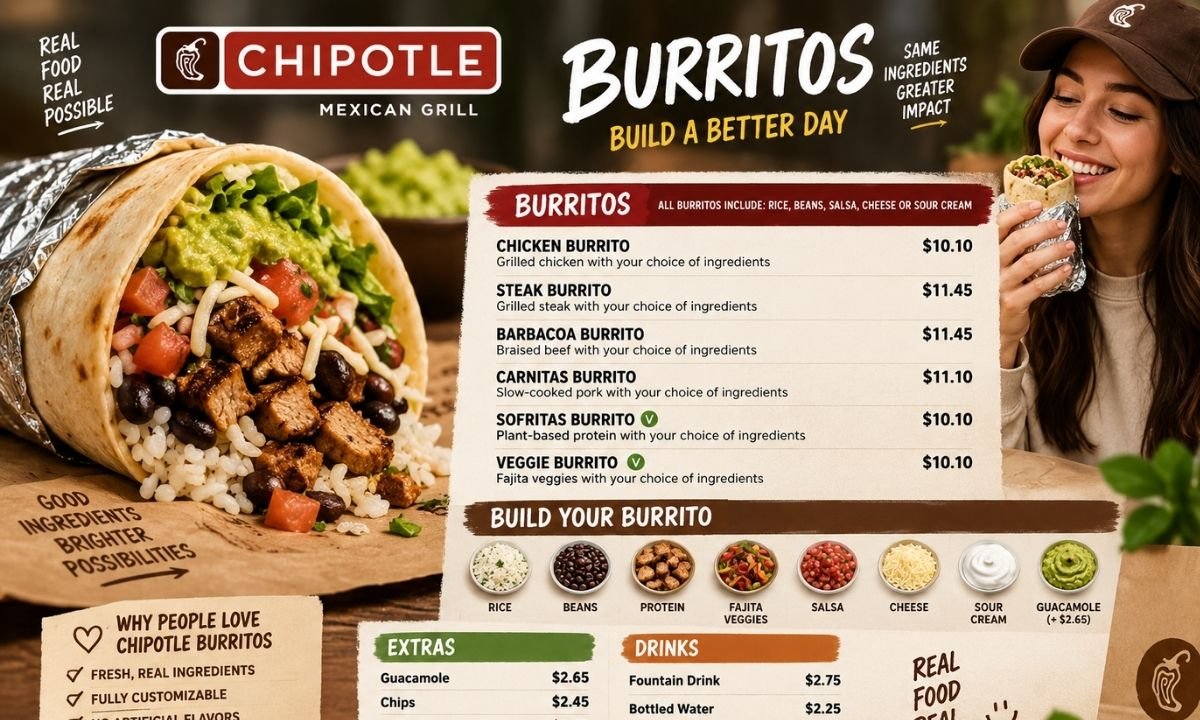
A Chipotle burrito starts with a 12-inch flour tortilla, and everything after that is up to you. There’s no set recipe you’re locked into. You walk down the line, point at what you want, and the person assembling your food adds it. Protein, rice, beans, salsa, cheese, sour cream, guacamole — each one is a separate decision, and each one changes the price, the calorie count, and how the burrito actually eats.
This guide breaks down every part of that decision. What’s in a standard burrito, what it costs to add extras, which allergens show up where, and how to order one that actually matches what you’re trying to eat — whether that’s a lighter lunch, a high-protein meal, or just the most food for the least money.
Chipotle Burrito Nutrition Facts
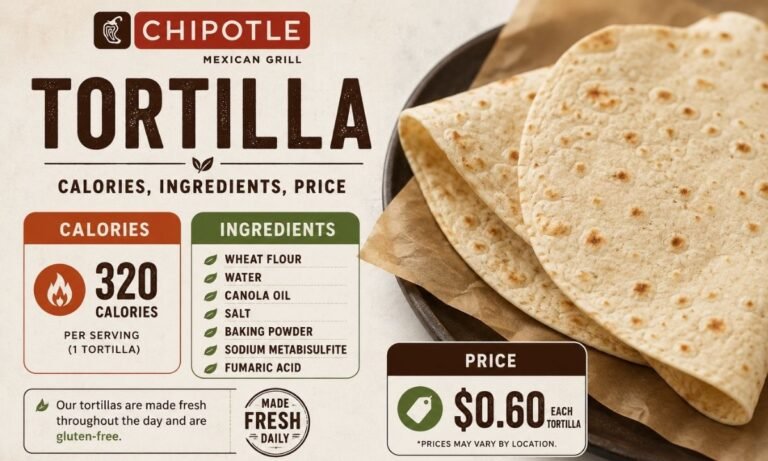
Calories in a Chipotle burrito swing a lot based on what you choose, and the tortilla itself is a bigger factor than most people realize. A single burrito-size flour tortilla runs about 320 calories on its own — before any protein, rice, or toppings touch it. That’s roughly 300 more calories than the same order built as a bowl, since a bowl skips the tortilla entirely.
A standard build — one protein, rice, beans, salsa, cheese, and sour cream — typically lands somewhere between 900 and 1,050 calories, depending on the protein and how much rice or cheese goes in. Chicken and steak sit toward the middle of that range. Barbacoa and carnitas run a little higher because of fat content. Sofritas and the veggie option come in lower on calories but aren’t automatically “light” — a fully loaded veggie burrito with double rice and extra cheese can still crack 900 calories.
Here’s a rough breakdown of what each component contributes to a standard burrito:
| Component | Approx. Calories | Protein | Carbs | Fat |
|---|---|---|---|---|
| Flour tortilla | 320 | 8g | 50g | 9g |
| Protein (chicken, 4 oz) | 180 | 32g | 0g | 6g |
| White rice | 210 | 4g | 40g | 4g |
| Black beans | 130 | 8g | 22g | 1g |
| Cheese | 110 | 6g | 1g | 9g |
| Sour cream | 110 | 1g | 2g | 10g |
| Tomato salsa | 20 | 1g | 4g | 0g |
Swap brown rice for white and the calorie difference is small — brown rice actually runs a few calories lower per serving and adds more fiber. Skipping sour cream and cheese is the fastest way to cut 150–200 calories without touching portion size on anything else. Sodium is the number worth watching more than fat: between the tortilla, cheese, and a salted protein, a standard burrito can hit 2,000+ mg of sodium, which is most of a full day’s recommended limit in one meal.
Here’s how the six proteins compare when you’re deciding which one to build around:
| Protein | Typical Price Tier | Calories (4 oz) | Protein | Fat | Best For |
|---|---|---|---|---|---|
| Chicken | Lowest | 180 | 32g | 6g | Everyday, lean protein |
| Sofritas | Lowest | 150 | 8g | 10g | Vegan, plant-based |
| Carnitas | Mid | 210 | 23g | 12g | Richer flavor, higher fat |
| Barbacoa | Mid-high | 170 | 24g | 7g | Spiced, slightly leaner beef |
| Steak | Highest | 150 | 21g | 6g | Lean, higher price tier |
| Veggie (fajita veg + guac) | Highest | 220 | 4g | 15g | Vegetarian, no meat |
Pricing tiers shift by market, but chicken and sofritas are almost always the two cheapest options, while steak tends to sit at the top regardless of location.
Chipotle Burrito Ingredients
Every burrito is built from the same five layers: protein, rice, beans, toppings, and the tortilla that holds it together. None of these are required — you can ask for a burrito with just rice and salsa if that’s what you want — but here’s what’s actually available at the counter.
Protein or Veggie Choices
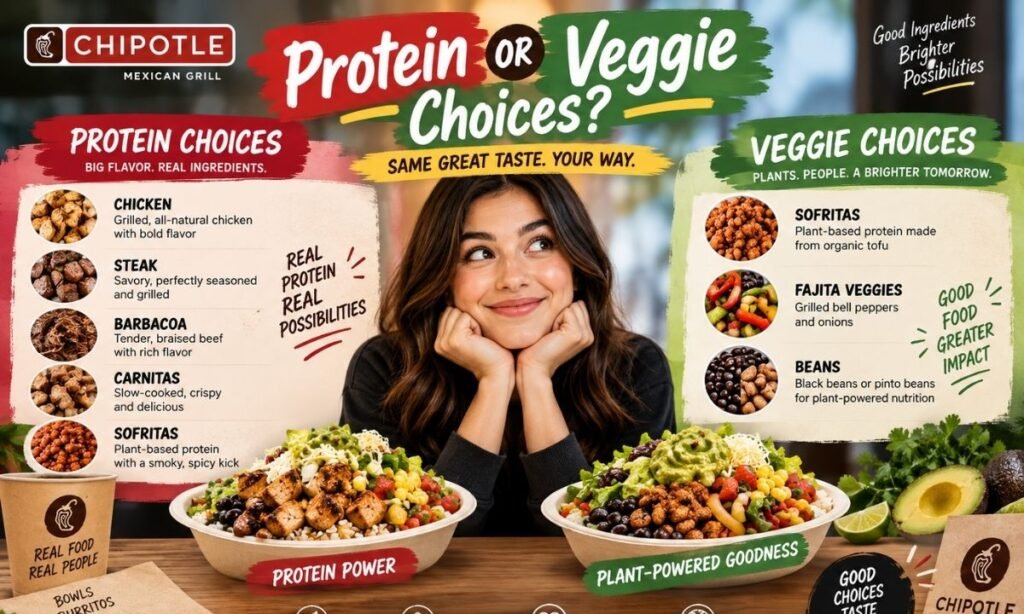
Chipotle offers six core proteins, plus sofritas as the vegetarian and vegan option:
- Chicken – adobo-marinated, grilled, the most ordered protein by a wide margin
- Steak – grilled with cumin, garlic, and black pepper
- Barbacoa – slow-braised shredded beef with chipotle peppers and cloves
- Carnitas – slow-braised pulled pork, slightly sweeter and fattier than the others
- Sofritas – organic tofu braised with chilis and roasted poblano, the only vegan protein
- Veggie (no meat, extra fajita veggies and guacamole at no charge as the “protein” swap)
Chipotle has also rotated in limited-time proteins in recent years, including honey chicken and al pastor chicken, so it’s worth checking the app or in-store board for what’s currently available before you commit to a build. A double-protein option exists too, aimed at people tracking higher protein intake — it roughly doubles the protein and fat of a single-protein build while adding minimal cost beyond the extra protein charge.
Rice Options
Two choices, both cilantro-lime:
- White rice – the default, slightly higher calorie count
- Brown rice – a whole-grain swap with more fiber, marginally fewer calories
You can also ask for half rice, double rice, or no rice at no extra charge either way.
Bean Options
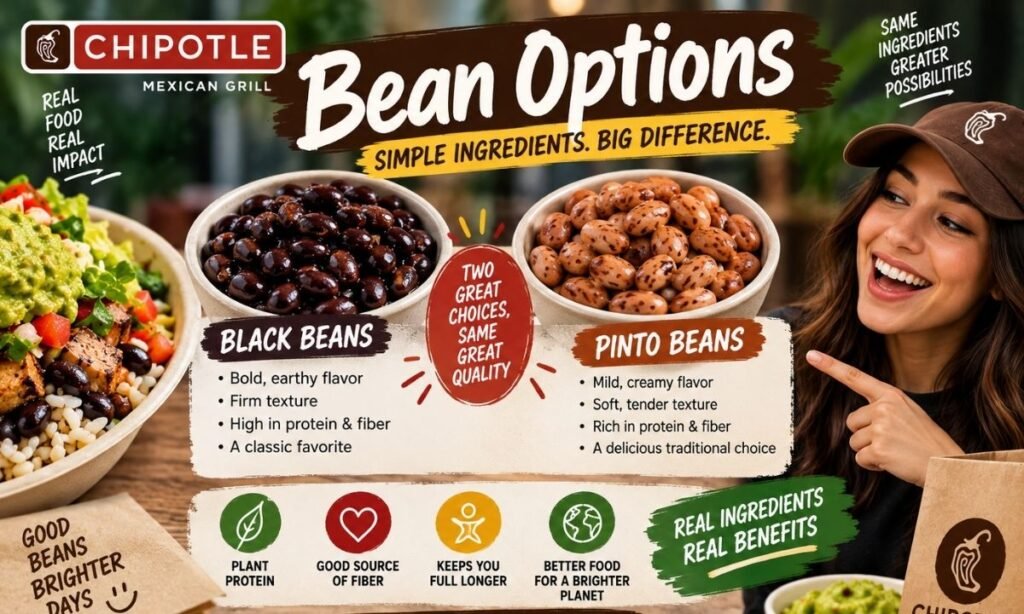
- Black beans – softer texture, slightly milder flavor
- Pinto beans – firmer, a touch earthier
Both are cooked without lard and are vegan by default. Half-and-half, no beans, or extra beans are all free modifications.
Toppings
This is where a burrito actually becomes yours. Free toppings include:
- Fresh tomato salsa (mild)
- Salsa verde (medium)
- Corn salsa
- Roasted chili-corn salsa (hot)
- Tomatillo-red chili salsa (hot)
- Fajita veggies (peppers and onions)
- Shredded cheese
- Sour cream
- Romaine lettuce
Guacamole is the one topping that consistently costs extra — usually a few dollars added to the base price — because avocado pricing fluctuates and Chipotle passes that cost through directly rather than absorbing it.
Queso is a newer paid add-on at many locations, running a similar price to guacamole. It’s not part of the free toppings list, so it needs to be specifically requested and paid for separately, unlike cheese, which comes free in shredded form.
A detail a lot of first-time orderers miss: you can ask for toppings “on the side” instead of mixed in, which matters if you’re taking the burrito to go and don’t want the tortilla to get soggy before you eat it. Salsa and sour cream are the two most common culprits for a soggy burrito if it sits for more than twenty minutes.
Tortilla Options
The default is a large flour tortilla, made fresh in-store daily. There isn’t a whole-wheat or low-carb tortilla option at Chipotle; if you’re avoiding gluten or cutting carbs, the standard move is ordering the same build as a bowl instead, which removes the tortilla completely and takes roughly 300 calories and 50g of carbs off the total.
Chipotle Burrito Allergens
The tortilla is the single biggest allergen concern on a Chipotle burrito. It’s made with wheat flour, which means gluten is baked into the burrito format itself — there’s no gluten-free tortilla swap. If gluten is a concern, a bowl with the identical fillings is the standard workaround, since every protein, rice, bean, salsa, and topping option is gluten-free on its own.
Dairy shows up in two places: shredded cheese and sour cream. Both are easy to leave off, and doing so makes the rest of a standard burrito dairy-free. Queso, if you add it as an extra, also contains dairy.
Soy is mostly a sofritas conversation — the tofu-based protein contains soy directly. Chipotle uses some soybean-based, highly refined cooking oil, which typically doesn’t trigger reactions in people with mild soy sensitivity. However, anyone with a severe soy allergy should ask staff directly instead of making assumptions.
Sulfites appear in barbacoa, sofritas, and several of the salsas (particularly the tomatillo-based ones), which is worth knowing if you’re sensitive to sulfites specifically rather than a more common allergen.
Chipotle doesn’t use peanuts or tree nuts as ingredients in any menu item, but the company doesn’t certify its kitchens as nut-free, so cross-contact is possible in any location. If you have a severe nut allergy, tell the crew before they start building your order — they can change gloves and use separate serving containers on request.
A quick reference for the four allergens that come up most often:
| Allergen | Where it shows up | Easy fix |
|---|---|---|
| Gluten/wheat | Flour tortilla only | Order as a bowl instead |
| Dairy | Cheese, sour cream, queso | Skip all three |
| Soy | Sofritas, refined cooking oil | Choose a different protein |
| Sulfites | Barbacoa, sofritas, tomatillo salsas | Choose a different protein/salsa |
None of these substitutions change the price of your order — swapping a bowl for a burrito, or skipping cheese and sour cream, doesn’t add or remove a charge either way.
How to order a Chipotle burrito (smart ordering tips)
The menu board only shows six proteins and a handful of toppings, but the actual number of ways to build a burrito runs into the tens of thousands once you factor in every combination of rice, beans, salsa, and extras. A few practical strategies make that easier to navigate depending on what you’re actually trying to get out of the meal.
If you want a burrito that tastes big but stays “reasonable” on calories
Skip rice, or ask for half rice instead of full. Rice adds roughly 200 calories and very little in the way of protein or fiber compared to what beans or extra veggies contribute. Swap sour cream for extra salsa and fajita veggies — you keep the moisture and flavor without the 110 calories sour cream adds. This single-swap approach can bring a burrito down from over 1,000 calories to somewhere closer to 700–750 without losing the feeling of a full meal.
If you want maximum protein
Order double protein, and lean toward chicken or steak over carnitas or barbacoa if you’re also watching fat content — the leaner meats deliver more protein per gram of fat. Add black beans rather than skipping them, since beans stack an extra 7–8 grams of protein on top of whatever the meat provides. A double-chicken burrito with beans and light rice can land north of 65 grams of protein in a single meal.
If you want the cheapest “full meal burrito”
Chicken and sofritas sit at the bottom of the protein pricing tier, so either one keeps the base cost down. Skip guacamole, since it’s the one add-on that reliably adds a few extra dollars — load up on the free toppings instead, since fajita veggies, extra salsa, and extra cheese all come at no additional charge. A standard beans-rice-cheese-salsa build with chicken is consistently the lowest-cost way to leave with a full-size burrito rather than a smaller item.
Chipotle Nutrition & Allergen Information
Chipotle publishes a full nutrition calculator and allergen breakdown at chipotle.com, and it’s worth using directly if you have a specific dietary restriction, since exact values can shift slightly as recipes or suppliers change. The company’s general disclosure is also worth knowing: foods are prepared in shared spaces, so despite reasonable precautions, cross-contact between allergens during prep is possible. If you have a serious or life-threatening allergy, telling the person assembling your order — not just relying on the menu board — is the safest approach every time.
Prices for individual proteins and add-ons also vary by location and market, sometimes by a couple of dollars for the same item depending on the city. The numbers in this guide reflect typical national ranges rather than one fixed price, so it’s worth checking the app or in-store board for your specific location before you order.
Frequently Asked Questions
What comes on a Chipotle burrito?
A standard build includes your choice of protein, rice, beans, salsa, cheese, and sour cream wrapped in a large flour tortilla — all fully customizable at no extra charge except guacamole.
What is the most popular Chipotle burrito?
Chicken is consistently the top-selling protein, making the chicken burrito with rice, beans, salsa, and cheese the most commonly ordered build nationwide.
What can I get at Chipotle for $5?
A basic side or a kids’ item can fit that budget, but a full-size burrito typically isn’t possible for $5 — burrito prices generally start closer to $9–10 depending on protein and location.
Is it cheaper to get a bowl or a burrito at Chipotle?
They’re usually priced the same for identical fillings — the bowl just skips the tortilla, so you’re paying the same price for slightly less food (and fewer calories).
Final Thoughts
A Chipotle burrito is all about how you build it. The same tortilla can turn into a relatively simple meal or a loaded burrito with well over 1,000 calories, depending on your protein, rice, beans, and toppings.
For a lighter option, cutting back on rice, cheese, or sour cream makes the biggest difference. If protein is your priority, double chicken with beans is a straightforward way to build a more filling meal. And if you’re trying to keep the price down, chicken or sofritas with the free toppings is a solid choice.